
Many aspects of modern horse care are shaped by what works best for us, our routines, our properties and our management systems, but these choices do not always reflect what is most natural for the horse. While domestic care offers safety and protection, it can also limit the movement, variety, social connection and natural behaviours horses are designed for. Understanding this difference can help us make more thoughtful choices that better support long-term health and wellbeing.
Wild horses and domestic horses may be the same species, but they live very different lives. These differences in movement, diet, environment and social interaction can have a big impact on health, behaviour and overall wellbeing.
Domestic horses benefit from care and protection but many parts of modern horse keeping are quite different from the natural lifestyle horses evolved for. Looking at these differences can help us better support their physical and mental health.
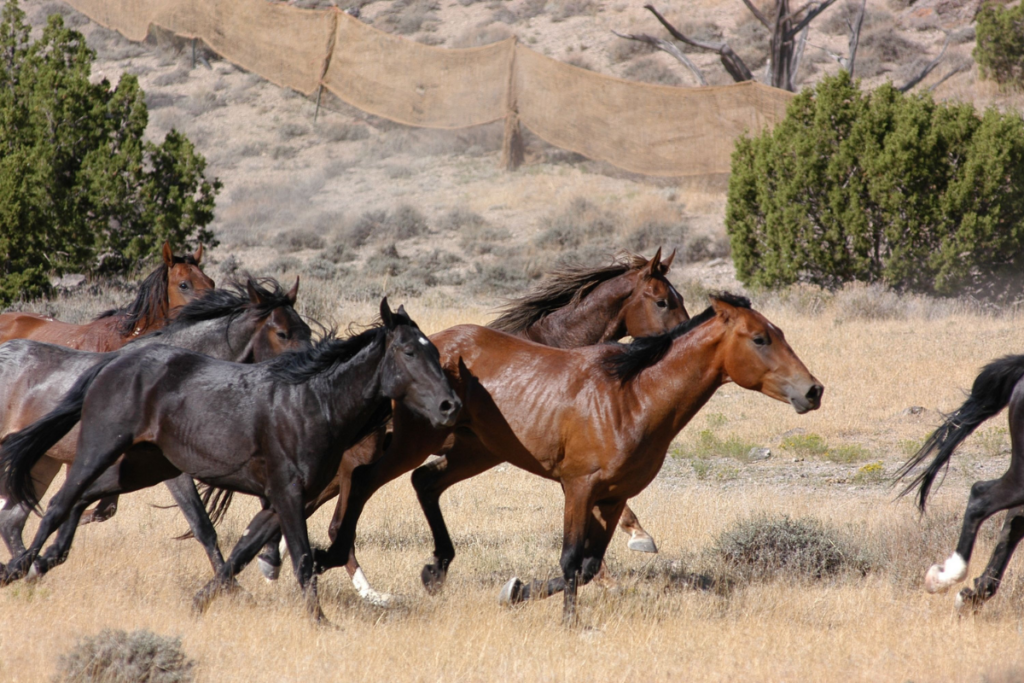
The Natural Lifestyle of Wild Horses
Wild horses live with constant movement, social connection and a varied diet.
Movement
Wild horses may travel many kilometres each day searching for food and water. One Australian study found feral horses travelled an average of 15.9 km per day, with a recorded range of 8.1 to 28.3 km per day. This steady movement helps support joints, muscles, circulation, hooves and digestion.
Dietary Variety
They graze and browse a range of grasses, herbs, shrubs and seasonal plants, creating a naturally varied and fibre-rich diet.
Herd Life
Horses are social animals. In the wild, they live in herds where they groom, play, move together and rely on one another for security.
The Domestic Horse Lifestyle
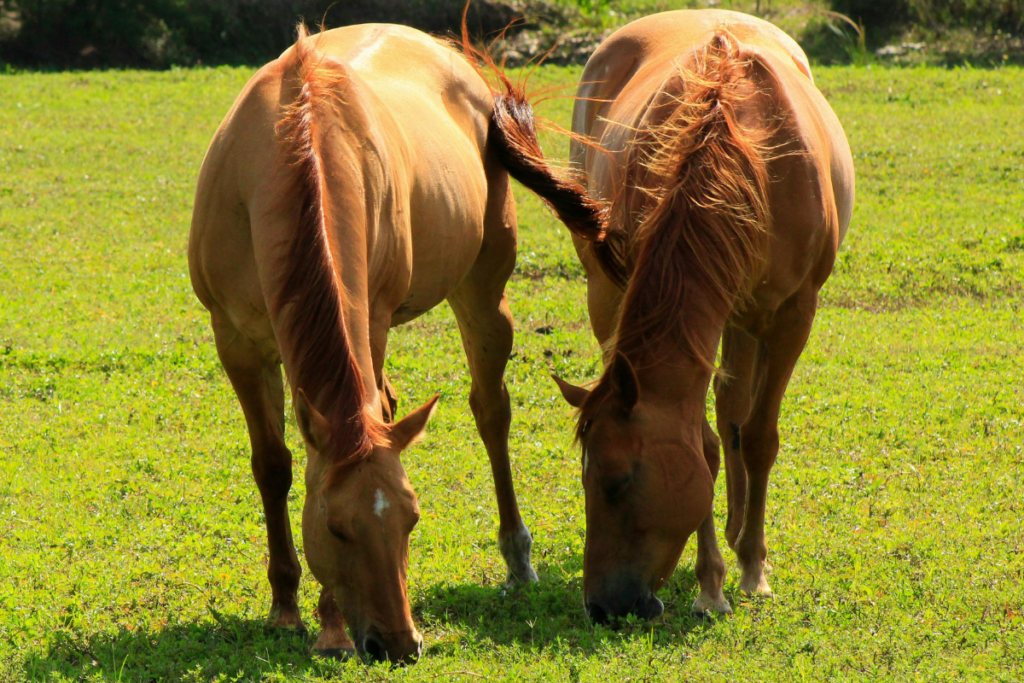
Domestic horses are often kept in ways that are practical for us but are very different from nature.
Less Movement
Small paddocks, yards and stables can restrict movement. Over time, this may contribute to stiffness, (hoof problems), weight gain and metabolic issues.
Less Dietary Diversity
Many domestic horses rely on green pasture, hay and hard feeds, often with less plant variety and sometimes more starch than needed.
Limited Plant Access
Unlike wild horses, domestic horses do not have access to a broad range of safe grasses, herbs and shrubs to browse.
Chemical Load and Modern Exposures
Domestic horses may also be exposed to a greater chemical load through sprayed pastures or hay, preservatives and additives in commercial feeds, and routine management products. From a holistic point of view, reducing unnecessary chemical exposure where possible may be another way to support overall wellbeing.
Reduced Social Contact
Some horses are kept (Often domesticated horses are paddocked?) alone or with limited herd contact, which can affect behaviour and emotional wellbeing. Horses are social animals and need companionship. Living alone may contribute to chronic underlying stress even when they appear to cope on their own.
Seasonal Adaptation and Rugging
Rugging can be helpful in some situations, especially for clipped, elderly or unwell horses, but overuse may interfere with natural temperature regulation. Without rugs or stabling, wild horses adapt naturally to the weather by growing and shedding coats with the seasons.
Horses can also lift the hairs in their coat to trap warm air close to the body, helping support natural temperature regulation. This natural response is part of how horses manage changing weather conditions. When horses are rugged too often or too heavily, it may reduce their ability to use these normal temperature-regulating mechanisms and can make them more dependent on external management.
In some cases, over-rugging may also contribute to overheating, reduced coat development and less natural seasonal adaptation. While rugs certainly have their place, they should ideally be used thoughtfully and only when genuinely needed, rather than as a routine default.
How This Can Affect Health
When a horse’s lifestyle does not match its natural design, health and happiness can be affected.
Metabolic Health
Too little exercise and rich feeding may increase the risk of obesity, insulin resistance and Equine Metabolic Syndrome.
Digestive Health
Horses are designed for regular movement and a fibre-rich diet. Too much grain, low forage intake or sudden diet changes can place extra stress on the gut.
Hoof and Joint Health
Daily movement supports hoof quality, circulation, joint mobility and muscle tone.
Mental Wellbeing
Restricted movement, boredom and isolation may contribute to stress and behaviours such as weaving, wind sucking or fence pacing.
Striving for Balance
Domestic horses do not need to live exactly like wild horses, but they do benefit when we support their natural needs as much as possible.
This may include:
- providing more daily movement
- feeding a forage-based, low-starch diet where appropriate
- offering safe plant variety
- allowing social contact
- mental stimulation
- rugging only when needed
Horse Management Options for Better Health
Paddock Paradise/ Track System
This horse management system inspired by Jaime Jackson’s observations of wild horses, which found that horses naturally travel long distances each day over varied terrain in search of food, water and shelter.
It uses a track-style layout to encourage steady movement, which may help support hoof health, circulation, digestion and mental wellbeing while reducing boredom and overgrazing. A great website on tracking https://hometrackhorses.com.au/
Equicentral System
This horse and land management approach that aims to improve horse health while also restoring pasture and soil. It uses a central loafing area with access to grazing, hay, water and shelter, encouraging natural movement, social behaviour and a high-fibre lifestyle, while also supporting healthier pastures and more sustainable land use.
Read more here – https://www.equiculture.net/the-equicentral-system
Natural Enrichment Ideas
Simple ways to add more interest and variety may include offering a herbal water buffet, salad bowl treats and adding safe forage plants and herbs to the environment.
A herbal water buffet gives horses the opportunity to choose between different herb-infused waters, while salad bowl treats can offer small amounts of horse-safe herbs, greens or vegetables for enrichment. Adding safe forage plants and herbs may also help encourage natural browsing and increase variety in their environment. You can learn more about natural forage and herbs here.
Bottom Line
Wild horses move more, eat a wider variety of plants, live socially and adapt naturally to their environment. Domestic horses rely on us to recreate as many of these natural foundations as possible.
The closer we get to supporting movement, fibre, variety and companionship, the better chance we give our horses to thrive.
We’re Here to Help
If you would like personalised natural support for your horse, you can ask your questions here, we are always happy to help.

